Asphalt vs Concrete: Which Is Better for Your Driveway?
Choosing between asphalt and concrete for your driveway is one of the most important decisions you'll make before installation, since each material comes with its own strengths, costs, and long-term considerations. Asphalt is typically cheaper to install and quicker to lay, making it a popular choice for larger driveways or budget-conscious projects, but it generally requires more frequent maintenance, such as sealing, and has a shorter overall lifespan than concrete.
Concrete, on the other hand, costs more upfront but offers greater durability, a longer lifespan, and more design flexibility, with options like exposed aggregate, coloured, or stamped finishes that asphalt simply can't replicate. Climate and ground conditions also matter: concrete can be prone to cracking on unstable or shifting soil without proper reinforcement, while asphalt's flexibility can handle minor ground movement better in some cases. Your decision ultimately comes down to priorities, whether that's upfront cost, long-term maintenance, appearance, or durability. Below, we compare asphalt and concrete driveways side by side across cost, lifespan, maintenance, and appearance to help you decide which is the better fit for your property.
Asphalt vs Concrete: Upfront Cost Comparison
In Christchurch, asphalt is generally the more affordable option upfront. Typical installed costs for a residential driveway:
Asphalt driveway:
Supply and lay: $40 – $80 per square metre
Full driveway (50m²): approximately $2,000 – $4,000
Concrete driveway:
Supply and pour: $80 – $160 per square metre
Full driveway (50m²): approximately $4,000 – $8,000
The gap in upfront cost is significant. Asphalt typically costs 40–60% less than concrete to install. For homeowners on a tighter budget, or those planning to sell within 5–10 years, asphalt's lower initial cost is a major advantage.
However, upfront cost is only one part of the financial picture.
Long-Term Cost: Which Is Cheaper Over Time?
When you factor in ongoing maintenance and eventual replacement, the cost comparison between asphalt and concrete shifts.
Asphalt:
Needs resealing every 3–5 years at a cost of $400 – $1,200 for a typical driveway
Surface repairs are generally affordable
Full resurfacing every 15–20 years may be needed
Total lifetime cost is competitive but higher than initial outlay suggests
Concrete:
Low ongoing maintenance costs
Sealing every 5–10 years is recommended but less critical than with asphalt
Repairs can be more expensive and harder to match aesthetically
Expected lifespan of 30–40+ years with minimal structural work
Over a 30-year period, the total cost of ownership for a well-maintained concrete driveway often equals or beats asphalt, despite the higher upfront cost. The crossover point depends heavily on how well each is maintained.
Durability and Lifespan
Durability is where concrete has a clear advantage.
Concrete driveways:
Expected lifespan: 30–40 years or more with proper construction and maintenance
Resistant to UV degradation, petroleum spills, and heavy loads when properly designed
More susceptible to cracking from ground movement (relevant in some Christchurch areas)
Once cracked, can be harder to repair invisibly
Asphalt driveways:
Expected lifespan: 15–25 years depending on maintenance and traffic
More flexible than concrete, which gives it some advantage in areas with minor ground movement
Softens in extreme heat and can track or rut under sustained heavy loads
UV degradation causes oxidation and brittleness over time without sealing
In Christchurch's climate — mild summers, cold winters, moderate rainfall — both materials perform reasonably well. Concrete's greater longevity means fewer replacement cycles over the lifetime of a property.
Appearance and Aesthetics
For many homeowners, appearance matters as much as function. Here's how the two materials compare aesthetically:
Asphalt:
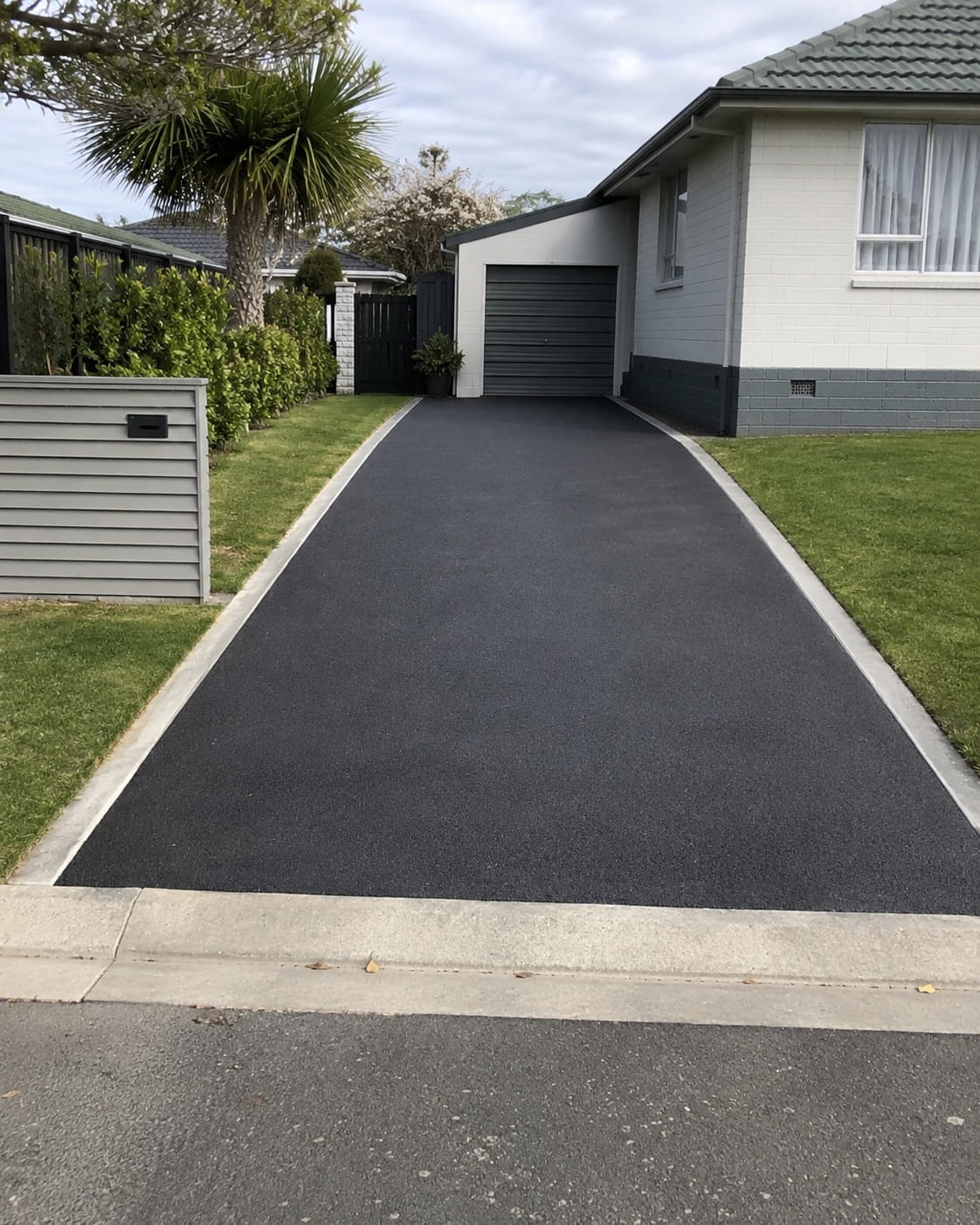
Classic dark grey/black finish
Clean, uniform look when new
Fades to lighter grey as it oxidises — requires resealing to maintain dark colour
Limited decorative options; can be edged with concrete for a smarter finish
Less suited to high-end or architect-designed homes
Concrete:
Versatile — available in grey, coloured, exposed aggregate, brushed, broom finish, or decorative patterns
Maintains its appearance longer without periodic sealing
Can be designed to complement the architectural style of your home
Better kerb appeal for resale purposes
If appearance is a priority — particularly for higher-value Christchurch homes — concrete offers considerably more options and holds its look better over time.
Maintenance Requirements
Neither material is truly maintenance-free, but asphalt is more demanding.
Asphalt maintenance:
Regular sealing (every 3–5 years) is essential to prevent oxidation and water infiltration
Cracks should be sealed promptly to prevent them widening
Petroleum and fuel spills damage asphalt and should be cleaned immediately
Surface can soften in very hot weather and may mark under heavy loads
Concrete maintenance:
Sealing recommended every 5–10 years, less critical than with asphalt
Joint maintenance (checking expansion joints for deterioration) is important
Oil and grease stains are more visible on concrete and harder to remove
Pressure washing periodically keeps the surface looking clean
For homeowners who prefer a low-maintenance option, concrete requires less ongoing attention and expenditure.
Performance in Christchurch Conditions
Christchurch has some specific conditions worth considering when choosing between asphalt and concrete.
Earthquake and ground movement: Canterbury's seismic history means ground movement is a real factor. Asphalt's flexibility gives it a slight advantage here — it can flex slightly with minor movement without cracking catastrophically. Concrete is more rigid and more likely to crack visibly if the ground moves.
Frost and temperature: Christchurch winters can bring frost, which can affect both materials. Concrete with poorly placed or missing expansion joints is susceptible to frost heave. Asphalt can become brittle in cold temperatures if not properly sealed.
Rainfall and drainage: Both materials shed water effectively when laid with the correct gradient. Permeable options exist for both — permeable concrete and porous asphalt — if drainage onto your site is a concern.
Subgrade conditions: Some Christchurch areas have soft or fill ground, particularly in suburbs rebuilt post-earthquake. Your contractor should assess the subgrade and recommend appropriate base preparation for either material.
Which Is Better for Resale Value?
From a property value perspective, concrete generally comes out ahead. A well-finished concrete driveway — particularly decorative concrete or exposed aggregate — adds more obvious visual value to a property than asphalt.
Real estate agents in Christchurch consistently note that driveway presentation makes a strong first impression. A fresh, well-maintained concrete driveway signals that the property has been cared for and can contribute positively to sale price and days on market.
Asphalt driveways can look excellent when new or freshly sealed, but they don't carry the same premium impression. For homeowners planning to sell within 5–10 years, the additional cost of concrete may be worthwhile.
Environmental Considerations
Both asphalt and concrete have environmental pros and cons.
Asphalt is derived from petroleum byproducts and requires reapplication every few years, adding to its environmental footprint. However, asphalt is highly recyclable — reclaimed asphalt pavement (RAP) is widely used in road and driveway construction.
Concrete production involves significant carbon emissions from cement manufacture. However, concrete's long lifespan means fewer replacement cycles, which can partially offset its production footprint. Pervious concrete designs also allow stormwater to filter through, reducing runoff.
If environmental impact is a factor in your decision, discuss permeable options with your contractor — both materials have improved permeable versions that reduce stormwater runoff and align with Christchurch City Council's stormwater management guidelines.
Asphalt vs Concrete: Which Should You Choose?
There's no universally correct answer — it depends on your specific situation.
Choose asphalt if:
Budget is a primary concern
You're planning to sell within 5–10 years and need cost-effective kerb appeal
You prefer a clean, dark finish and don't mind the maintenance
Your site has some ground movement risk and you want flexibility
Choose concrete if:
You want maximum longevity with lower ongoing maintenance
Appearance is important and you want decorative options
You plan to stay in the property long-term
You want to maximise property value
You're willing to pay more upfront for a lower total cost of ownership
For most Christchurch homeowners who plan to stay in their property long-term, concrete is the better investment. For those prioritising upfront affordability, asphalt is a perfectly valid and cost-effective choice — provided it's properly maintained.